EVERYDAY CARGO
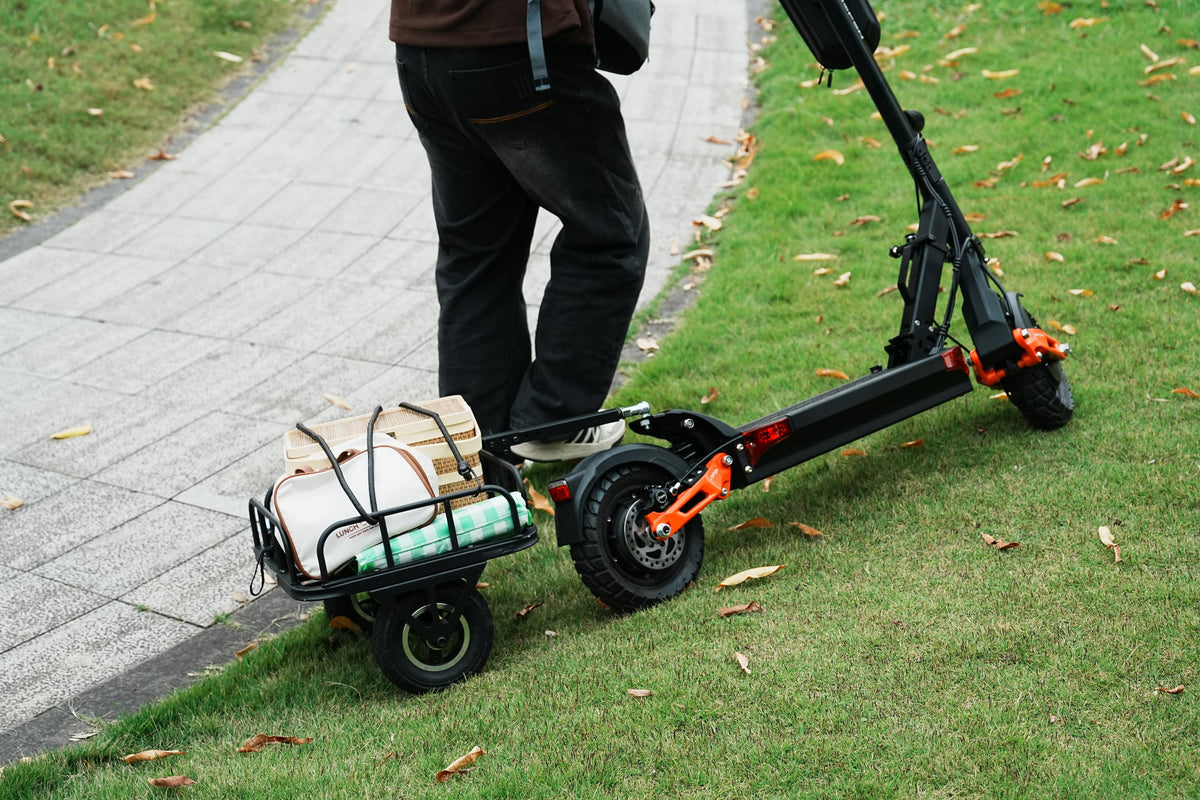
A shopping bag on the handlebar can swing into your knees. A bulky backpack can make a short errand feel awkward. A compatible cargo trailer offers a separate place for those items, while keeping the scooter deck available for the rider.
The JOFEN T1 cargo trailer, sold by JOYOR Prime for compatible JOYOR S/T Series models, has a 40 × 45 cm open platform and two 8-inch pneumatic tires. Here is how to make that space useful.
Give everyday items their own space
Plan around a real task: a small grocery shop, a backpack or a light picnic kit. Set the intended items on the floor first, then measure the footprint of the bags you normally use.
Check height as well as width. A tall, narrow bag may fit the base but still need a more stable arrangement. A few compact bags usually leave more room to secure the load and inspect the frame than one loosely packed stack.
Confirm the connection before planning the load
The S/T Series description is a starting point, not confirmation that every version fits. Match your exact model and its mounting points to the current product information. The standard connector is included, while a model-specific Fitment Kit may need to be purchased separately.
- Identify your full scooter model and version before choosing hardware.
- Check the mounting position and the space around the rear wheel, fender and suspension.
- Use the specified parts and installation instructions; ask support if your arrangement differs.
A parked photograph cannot show every clearance during movement. Do not improvise adapters, enlarge mounting holes or substitute fasteners. Check the fit before loading, then inspect the installed connection as instructed.
Use the platform as a layout, not a weight target
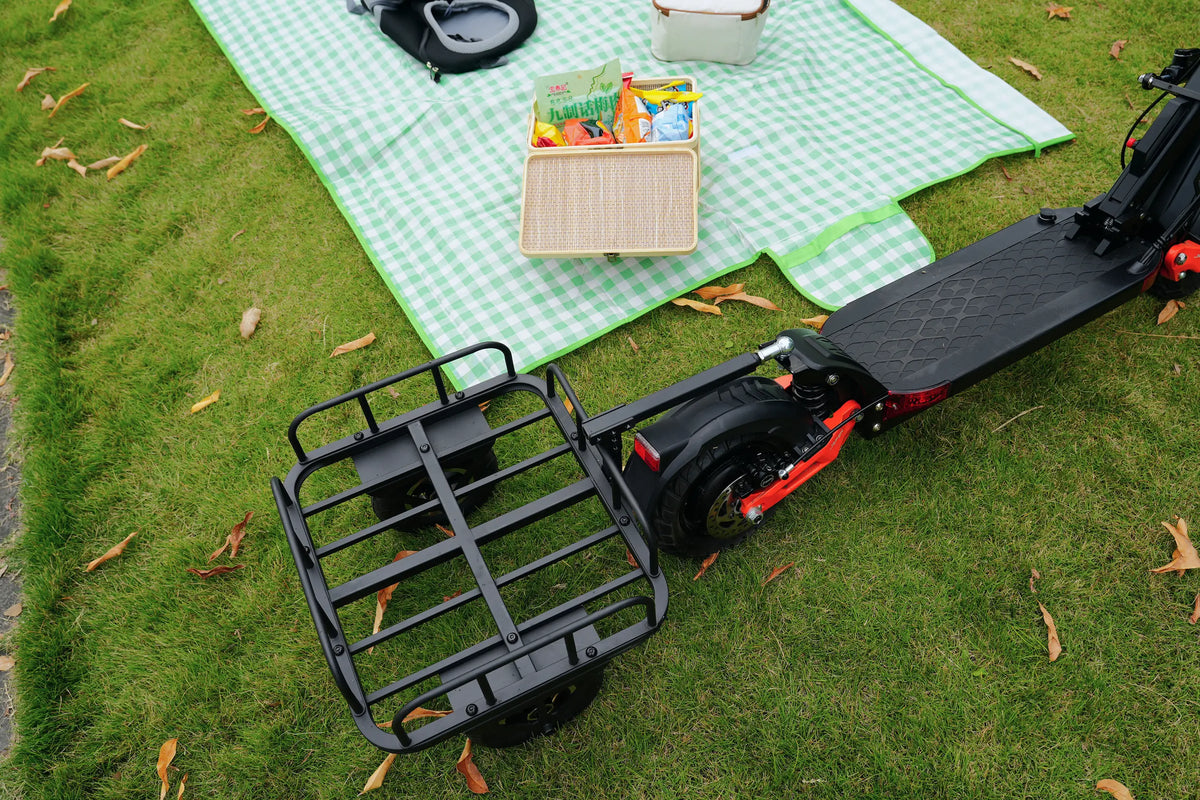
The 40 × 45 cm platform is an open slatted base with raised rails. Check that the base of each bag is supported and that small objects cannot fall through the gaps. Place loose groceries inside a suitable bag or container rather than directly on the platform.
Swipe to compare
| Everyday item | Useful arrangement | Check before moving |
|---|---|---|
| Grocery bags | Keep heavier contents low and distribute them across the base. | Bags remain within the platform and cannot tip outward. |
| A backpack | Lay it securely with straps contained. | No loose straps can reach a tire, axle or connector. |
| Picnic equipment | Use compact bags and keep fragile items protected. | Nothing shifts when the secured load is checked. |
Keep it low, balanced and restrained
Park on firm, level ground and keep the assembly stable while loading. Position heavier items low and centrally, following the supplied loading guidance. Avoid concentrating everything against one outside rail or building a tall stack above lighter bags.
Use suitable cargo restraints at the attachment points specified for the trailer. Keep straps away from tires, axles and moving parts. A strap lying over a bag is useful only when it is properly anchored and tensioned; the raised rails do not replace a restraint.
Check each bag for movement with the assembly stationary. If the contents settle and leave a strap loose, rearrange and secure them again. Leave access to the connector so you can inspect it without unloading everything.
Keep the load within the platform
- Check the fitted hitch
- Balance and secure the load
- Keep straps clear of wheels
Conceptual loading guide, not an installation drawing
Walk around the complete setup
- Connection: check that the specified hardware and retention parts are correctly fitted.
- Wheels: inspect both trailer tires for visible damage and check pressure using the applicable instructions.
- Cargo: check restraints, contained bag handles and clearance from moving parts.
- Space: allow for the trailer’s extra width and length when planning a route.
The two 8-inch tires are pneumatic, so they need pressure checks rather than a visual glance alone. Use the specified pressure for the trailer tires; the scooter’s pressure is not automatically the right value. If a tire repeatedly loses air or a connection feels loose, resolve that before use.
Follow the applicable instructions for a short, low-speed check in a suitable clear area. Stop and recheck the restraints afterward. A trailer changes the space and handling of the combination; it does not make a narrow passage or rough surface suitable.
Know what the setup is intended to carry
Use the trailer for cargo, not a passenger or a pet. Product scenes do not demonstrate an approved load, route or towing condition. Check the instructions and applicable local requirements for the exact scooter-and-trailer combination before deciding where to use it.
Explore the trailer and confirm your fit
Start with the current trailer listing, then confirm the exact hardware for your scooter before ordering.

JOFEN T1 Heavy-Duty Cargo Trailer for JOYOR S/T Series E-Scooters
A 40 × 45 cm open cargo platform with two 8-inch pneumatic tires. Check your exact model and any required Fitment Kit.
View the Cargo TrailerCargo trailer questions
Will it fit every JOYOR scooter?
Do not assume universal compatibility. Confirm your full model, mounting points and required hardware against the current listing and instructions.
Can I carry loose groceries on the slatted base?
Use a suitable bag or container. The open base has gaps, and cargo still needs proper restraint even when surrounded by rails.
Does the trailer need tire maintenance?
Yes. Its pneumatic tires need inspection and pressure checks using the trailer’s specified guidance, separately from the scooter tires.
Can the loading photo tell me how much I may carry?
No. A photograph shows a scene, not a capacity test. Follow the limits and conditions for the complete scooter, connector and trailer setup.