JOYOR Buying Guide
An electric scooter can carry more than one power figure without any contradiction. The important question is what each number describes. Before you compare scooters, check whether the figure is rated or peak power, and whether it covers one motor or the whole scooter.
Three Distinctions That Matter
Rated vs Peak
A peak figure is not a promise of continuous output. Its duration and test conditions matter; if these are not stated, do not assume the scooter can maintain that level throughout a ride.
One Motor vs Two
Two motors rated at 1000W each give a combined rated figure of 2000W. That does not mean 2000W per wheel, and it does not automatically make the scooter twice as fast.
Input vs Output
Electrical input is power supplied to the drive system; mechanical output is power delivered by the motor. Some energy becomes heat. A maximum input figure and a peak output figure are not interchangeable.

Read the T12 and T12 Ultra Listings
These are the figures currently stated on the linked JOYOR Prime product pages. The table clarifies their labels; it is not an independent output measurement or a matched-condition performance test. The linked pages do not state a peak-power duration or a common input/output measurement basis alongside these figures.
↔ Swipe the table to compare
| What the figure describes | JOYOR T12 | JOYOR T12 Ultra |
|---|---|---|
| Motor configuration | Single motor | Dual motors |
| Rated power per motor | 800W | 1000W |
| Combined rated power | 800W | 2000W (1000W × 2) |
| Stated total peak power | Up to 1000W | Up to 3000W |
For T12 Ultra, 2000W rated and up to 3000W total peak describe different ratings of the same dual-motor setup. The 3000W figure is already the total; do not multiply it by two again.
What Watts Cannot Tell You on Their Own
Watts measure power, not torque, battery capacity or permission to ride on public roads. Acceleration and climbing also depend on motor control, gearing where fitted, wheel size, rider load, battery condition and grip. More stated peak watts alone cannot establish which scooter climbs better on your route.
- For hills, consider gradient, slope length and load together.
- For range, compare battery energy and stated test conditions separately from motor power.
- For handling and ownership, include tires, brakes, suspension, weight and storage size.
Three Checks Before You Compare
-
Read the label
Look for rated, peak, maximum input and per-motor or combined wording. -
Ask about the basis
If the measurement method or duration is unclear, ask support rather than treating two figures as directly comparable. -
Match your route
Choose the complete scooter around your journey and local riding requirements, then use watts as one part of that decision.
Common Questions
Is peak power available throughout the ride?
No. It describes a short-duration level, and actual delivery depends on operating conditions and system limits. A peak label does not specify how long that level lasts.
Can battery voltage or Ah tell me peak motor power?
No. Voltage and Ah describe battery characteristics. You need the manufacturer’s motor rating and its measurement basis; do not derive a peak figure from battery capacity.
Does a higher power figure establish road legality?
No. Motor wattage alone does not establish legal status. Check the requirements for the country and location where you plan to ride.
See the Figures on the Actual Scooters
Open each product page to check its current configuration and full specifications before deciding.
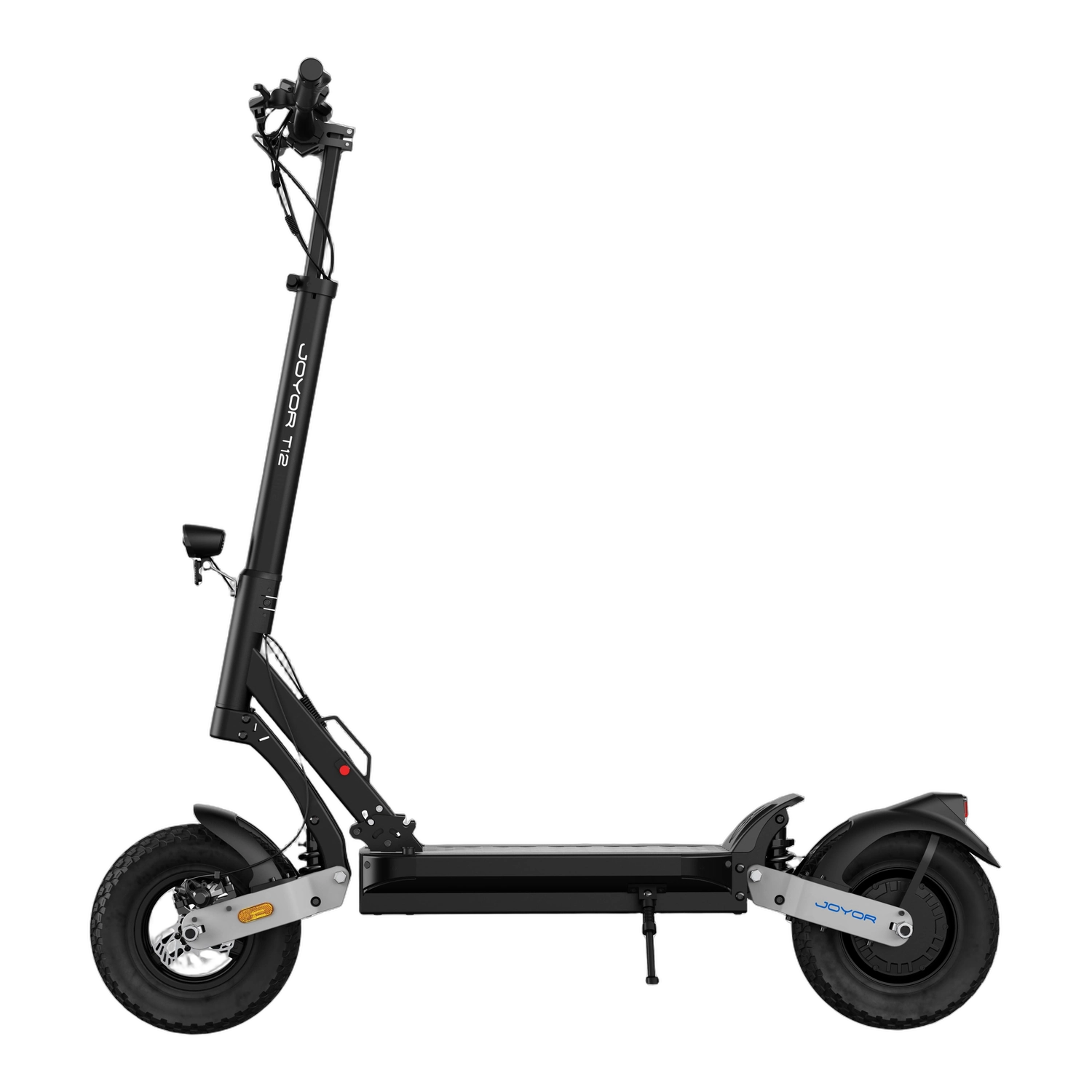
JOYOR T12
Single motor: 800W rated and up to 1000W peak. A clear example of two different ratings for one drive motor.
View T12 →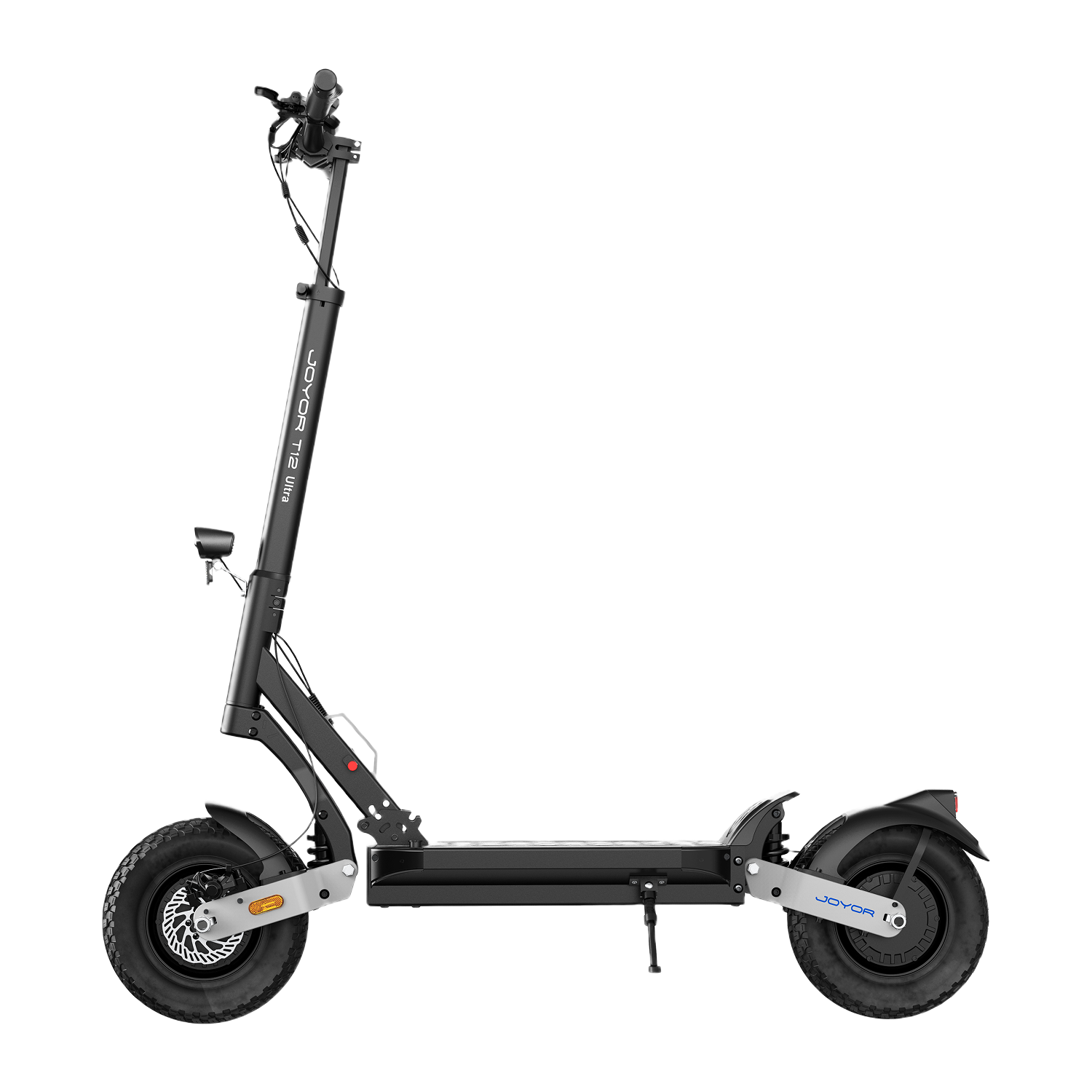
JOYOR T12 Ultra
Dual motors: 1000W rated each, 2000W combined rated and up to 3000W total peak. Read all three figures together.
View T12 Ultra →