JOYOR RIDING GUIDE
Why does an electric scooter sometimes feel unsettled through the handlebars? And what actually changes when you add a steering damper? Discover the technology behind this compact upgrade, the difference it can make to steering feel, and how to choose the right kit for your JOYOR scooter.
Every turn, bump and small correction you make while riding passes through your scooter's steering system. Most of the time, those movements feel natural. But a sudden disturbance from the road can also make the handlebars react more sharply than expected. A steering damper adds controlled resistance to steering movement, helping moderate quick, unwanted handlebar motions while allowing you to steer normally.
It is a small component with a specific purpose. Understanding that purpose is the best way to decide whether it belongs on your scooter.
1. What Is an Electric Scooter Steering Damper?
A steering damper, also called a steering stabilizer, is a device fitted between the scooter's steering assembly and a suitable fixed mounting point. As the handlebars turn, the damper extends or compresses and resists that motion.
Think of it as an additional layer of control over how quickly the steering can move. It does not lock the handlebars in place or steer the scooter for you. Instead, it provides resistance to abrupt steering motion, which can help make the front end feel more composed under suitable riding conditions.
2. How Does a Hydraulic Steering Damper Work?
Many linear steering dampers use a piston moving inside a cylinder filled with hydraulic fluid. When the handlebars turn, the piston moves and forces fluid through restricted passages. The resistance created by that fluid movement opposes the steering motion.
 Mounting Point
Piston Rod
Piston
Hydraulic Oil
Cylinder
Mounting Point
Restricted Oil Flow Passages
(Valves)
Handlebar Turns
The steering motion pushes or pulls the damper rod.

Oil Creates Resistance
The piston forces hydraulic oil through narrow internal passages.

Motion Is Controlled
Hydraulic resistance helps slow sudden steering movement.

Swipe left to see all 3 steps →
The important detail is that damping responds to movement, rather than simply holding the handlebars in a fixed position. This is why a correctly fitted steering damper can still permit normal turns. The exact feel depends on the damper design, adjustment and mounting geometry.
3. What Difference Does a Steering Damper Make?
One of the easiest ways to understand a steering damper is to consider what happens when the front wheel encounters a small disturbance.
Without an additional steering damper
The handlebars respond according to the scooter's original steering geometry, tire characteristics and mechanical condition. If the front wheel receives an unexpected sideways input, that movement can be transmitted to the rider more directly. A light steering feel is often convenient, but quick corrections may also feel more pronounced.
With a correctly installed steering damper
The same steering movement is met by additional hydraulic resistance. Sudden handlebar motion may feel less abrupt, and the rider may notice a firmer, more deliberate steering response. Normal cornering remains possible, although the effort needed to turn the handlebars can increase depending on the setting.
| Riding characteristic | Without damper | With damper |
|---|---|---|
| Sudden handlebar movement | No added hydraulic resistance | Additional resistance helps moderate movement |
| Steering feel | Original factory response | Typically firmer, depending on adjustment |
| Road-induced steering inputs | Can be felt more directly | Some quick inputs may feel less sharp |
| Low-speed turning | Original steering effort | May require slightly more effort |
These are general mechanical differences, not guaranteed results for every scooter or riding situation. A steering damper does not repair worn bearings, loose fasteners or damaged tires.
4. When Can a Steering Damper Be Useful?
Riders consider steering dampers for different reasons. The benefit is not about making a scooter faster; it is about changing the way the steering reacts.
- Everyday commuting: Small changes in road surface or uneven pavement can send quick inputs through the front wheel. Extra steering resistance may make those reactions feel less abrupt.
- Longer rides: Some riders prefer a steadier, less sensitive steering feel over extended journeys, provided the damper is set appropriately.
- Variable terrain: When riding across different permitted surfaces, a damper can help moderate sudden steering deflections caused by minor irregularities.
- Personal steering preference: An adjustable damper lets you fine-tune resistance to suit your preferred control feel.
There is a trade-off: more damping also means more resistance when you intentionally steer. The goal is a controlled response without making the scooter difficult to maneuver.
5. How Much Damping Should You Use?
On an adjustable steering damper, the adjustment knob changes the amount of resistance. You do not need to use the highest setting to benefit from the device.

Lighter damping
The handlebars generally feel easier to turn. This can suit riders who prefer a lighter steering response, although resistance to quick unwanted movement is lower.
Stronger damping
The handlebars feel firmer and resist sudden motion more strongly. Excessive resistance can make turns and rapid corrections harder.
Start with the setting recommended for your kit and make small adjustments according to the manufacturer's instructions. Steering should always remain smooth and predictable across the scooter's full normal turning range.
6. Choosing a Steering Damper for Your JOYOR Scooter
JOYOR Prime offers dedicated steering damper options for selected T-Series and S-Series models.
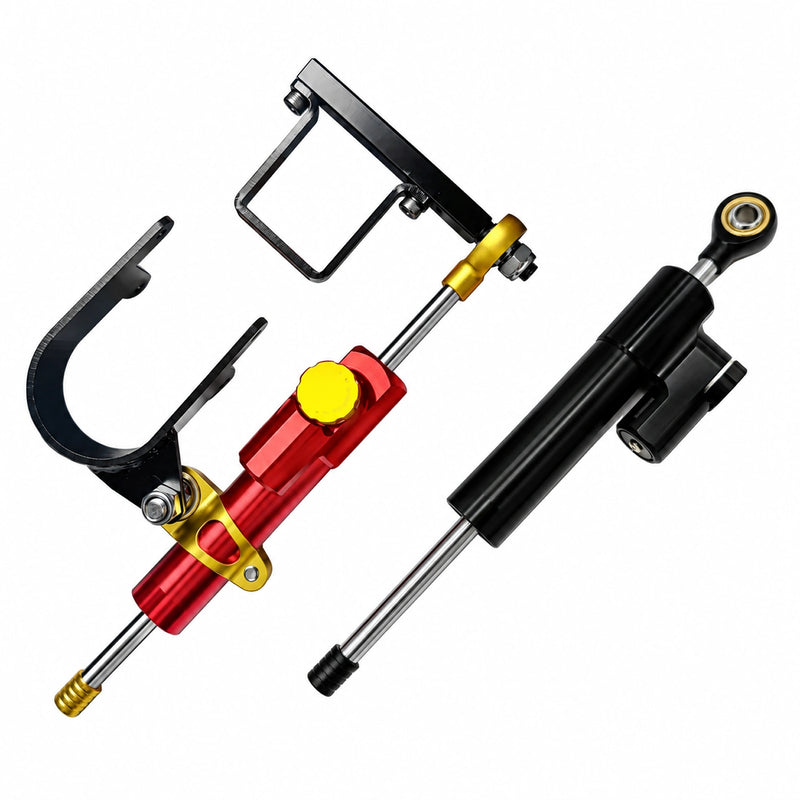
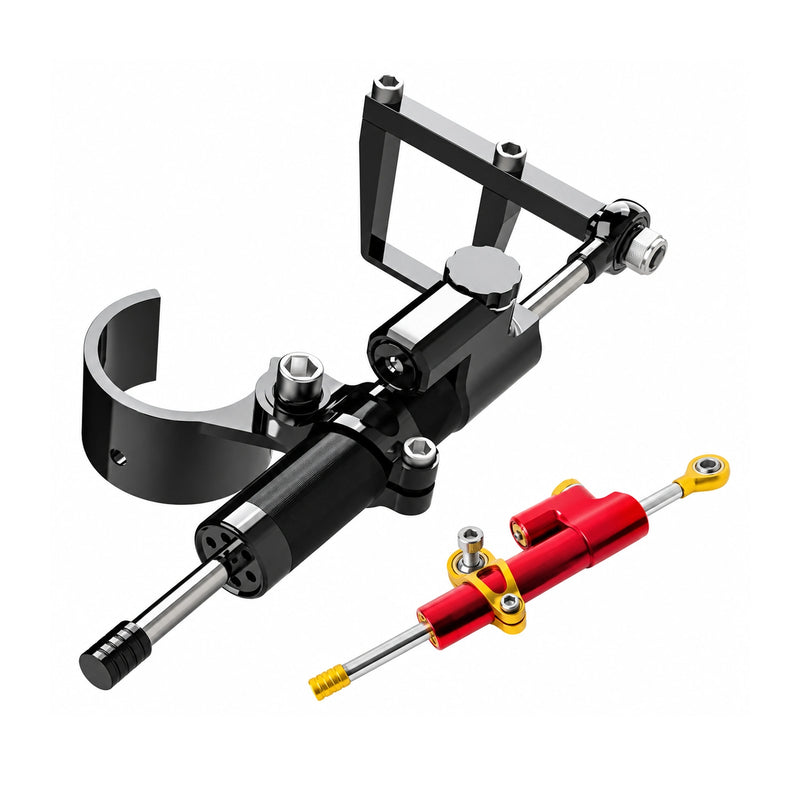
Check your exact model name before ordering. The model-specific kit and mounting hardware are just as important as the damper body itself.
7. Installation: What Matters Most?
A correctly installed steering damper should not interfere with normal steering, brake hoses, cables or folding components. Its mounting brackets must be secure, and the damper must have enough travel for the scooter's entire normal left-to-right steering range.
Before riding, check that:
- The kit and brackets match your scooter model.
- The handlebars can turn smoothly through their full normal range without the damper reaching the end of its travel.
- The damper does not contact cables, hoses or surrounding components.
- All mounting fasteners are tightened according to the kit instructions.
- The steering feels predictable during a cautious, low-speed check in a safe area.
If steering binds, feels unusually heavy or does not reach its normal range, stop and inspect the installation. If you are unsure about installation or adjustment, please contact JOYOR Prime after-sales support for assistance.
8. Frequently Asked Questions
Will a steering damper eliminate all handlebar wobble?
No. It may help reduce rapid steering movement, but wobble can also be caused by mechanical faults, tire condition or other factors. If your handlebars wobble unexpectedly, stop riding and investigate the cause before considering an upgrade.
Does a steering damper make turning difficult?
It adds steering resistance, so you may notice a firmer feel, particularly with stronger damping settings. A suitable kit that is installed and adjusted correctly should still allow the scooter's full normal steering range.
Can I use a steering damper instead of maintaining my scooter?
No. Check tire pressure, wheel condition, steering bearings and fasteners as part of routine maintenance. A damper is an accessory, not a repair for worn or loose parts. For more information, see our JOYOR stem wobble troubleshooting guide.
Is a steering damper suitable for everyday riding?
It can be useful for riders who prefer a more controlled steering feel, but the benefit depends on the scooter, installation, adjustment and riding conditions. Use a compatible kit and keep both hands on the handlebars whenever riding.
Can any steering damper fit my JOYOR scooter?
No. Mounting positions, bracket shapes and damper travel must match the scooter. Choose the product listed for your exact model.
A More Controlled Steering Feel Starts With the Right Setup
A steering damper is not a cure for every kind of wobble. When properly matched, installed and adjusted, however, it can add useful resistance to sudden steering movements and let you tailor the feel of your ride. Explore JOYOR's compatible options to find the kit designed for your scooter.
Shop JOYOR Steering Dampers