CHOOSE FOR YOUR ROUTE
Wheel size is easy to find on a specification sheet, but what does it mean for your choice? Start with your usual surfaces and available space rather than choosing the biggest number.
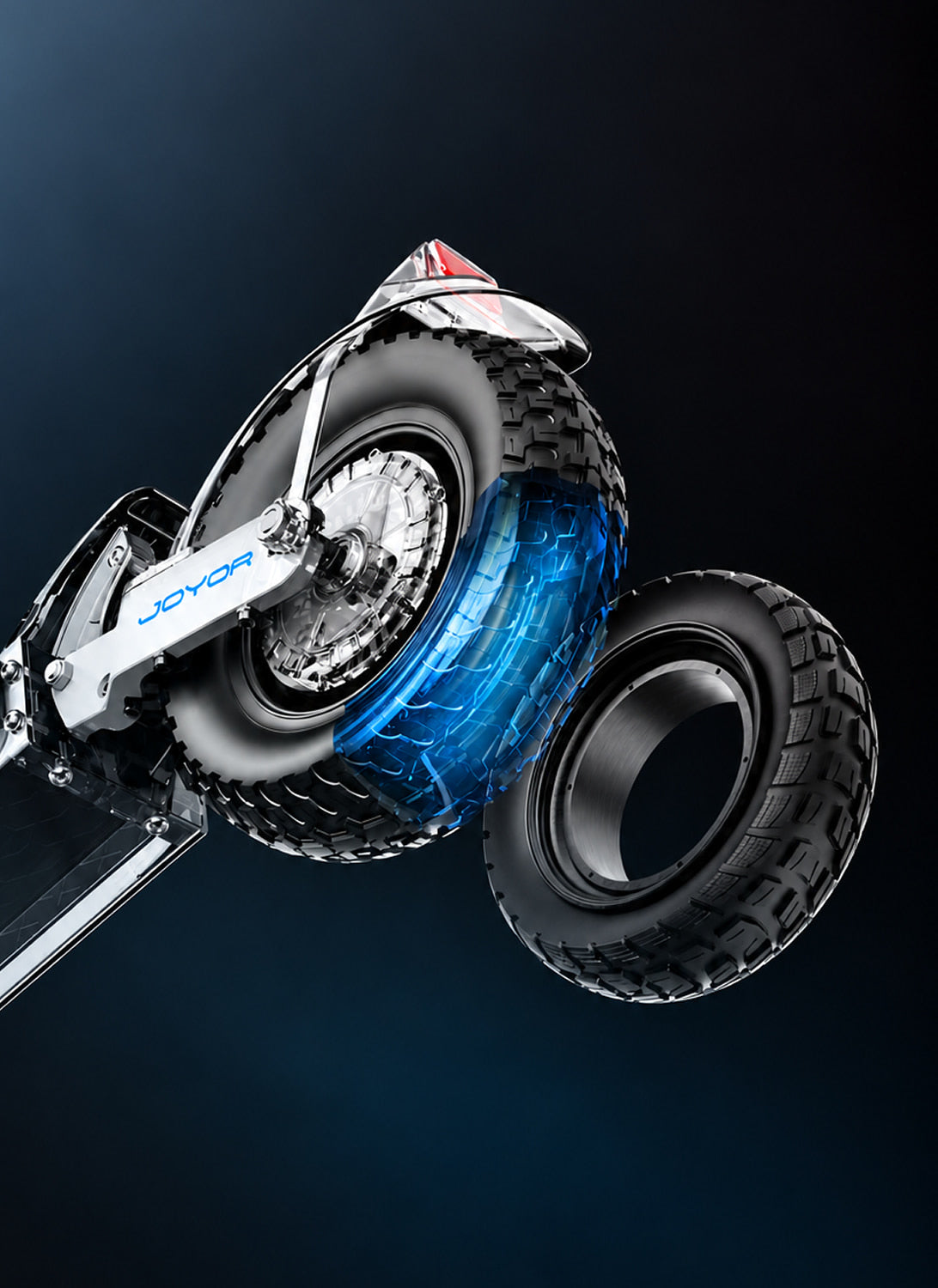
JOYOR T10 uses nominal 10-inch pneumatic tires, while T12 and T12 Ultra use nominal 12-inch tubeless off-road tires. Those examples help explain the choice, but they are complete scooters with other differences. Wheel diameter alone cannot rank their comfort, control or practicality.
Understand what the inch label tells you
A 10-inch or 12-inch description is a nominal tire-size label, not an exact measurement of the loaded rolling radius. Tire design, tread, pressure and load can change the shape and effective dimensions in use.
Keep diameter separate from width and construction. A wider tire is not automatically a larger-diameter tire. Pneumatic means air-filled; tubeless describes an air-filled tire that seals without a separate inner tube. Off-road describes the intended tread or application, rather than whether the tire uses a tube.
Why a larger wheel can feel different
Imagine two wheels approaching the same small raised edge. In a simplified side-view diagram, the larger wheel meets that edge with a less abrupt geometric approach. That helps explain why diameter can influence the response to small changes in surface level.
The diagram cannot tell you how much smoother a real scooter will feel. Speed, tire deformation, rider position and suspension all affect the result. A larger wheel also does not turn a pothole, curb or broken surface into something to ride through. Slow down, choose a clear line or dismount when necessary.
Nominal wheel diameter
Same ground reference
Relative size illustration, not a performance test
Look beyond diameter for comfort and control
An air-filled tire can deform as it meets the ground, while the suspension manages movement between the wheels and the scooter frame. These are different parts of the ride experience. Neither replaces the other, and a wheel-size label does not tell you how the complete setup responds.
Pressure deserves its own check. Use the guidance for the exact scooter and tires, checking pressure under the specified conditions. Do not deliberately underinflate a tire to chase comfort: pressure affects tire shape and operation. Equally, the highest value printed on a sidewall is not automatically the recommended setting for your scooter.
Tread and surface condition matter too. A tire described as off-road does not guarantee grip on wet leaves, gravel or smooth paving. Inspect wear and damage, choose a suitable route and keep your speed appropriate for the conditions.
Check the doorway, stairs and storage space
Larger wheels may need a different frame layout, but diameter alone cannot predict weight or folded size. Compare the complete models. If you carry a scooter upstairs, lift it into a car or store it under a desk, practicality matters alongside ride feel.
- Measure the storage opening and the space available after folding.
- Check the whole scooter’s weight against what you can comfortably handle.
- Look at the deck, handlebar and folded shape, not just wheel diameter.
- Consider whether you will carry the scooter regularly or mainly roll it into storage.
Make these checks before assuming a 10-inch model will be compact or a 12-inch model will be inconvenient. Battery, motors and frame design can outweigh the size difference at the tire.
Choose around the most demanding part of your routine
Swipe to compare
| Your routine | What to compare | How to use wheel size |
|---|---|---|
| Mostly smooth, maintained paths | Whole-scooter size, tire care and carrying needs | A 10-inch option may meet your needs; a larger diameter is not essential by itself. |
| Frequent small surface changes | Tire construction, suspension and suitable route choice | Include 12-inch options, then compare the complete setup. |
| Stairs or limited storage | Verified weight, folded dimensions and handling | Decide on the actual scooter rather than the inch label. |
| Replacing an existing tire | Approved size, rim fit and exact model version | Keep to the specified fitment; this is not an upgrade guide. |
Identify the hardest part of your route: a rough stretch, perhaps, or a staircase at the end. Use that constraint to shortlist models, then compare their other specifications. Avoid solving one problem while creating another daily inconvenience.
Use real models to check your shortlist
The T10 is a 10-inch pneumatic example; the T12 series offers 12-inch tubeless examples. Check each model’s current specifications and intended use separately. A wheel comparison cannot establish road-use approval or suitability for your location.
Already own a JOYOR? Treat this as buying guidance, not permission to fit larger wheels. Wheel, brake, motor, fender and frame clearances are model-specific. Ask support about approved replacement parts instead of trying an unsupported size change.
Compare two real wheel-size examples
Review full specifications alongside diameter. T12 Ultra also uses the series’ 12-inch tubeless format.
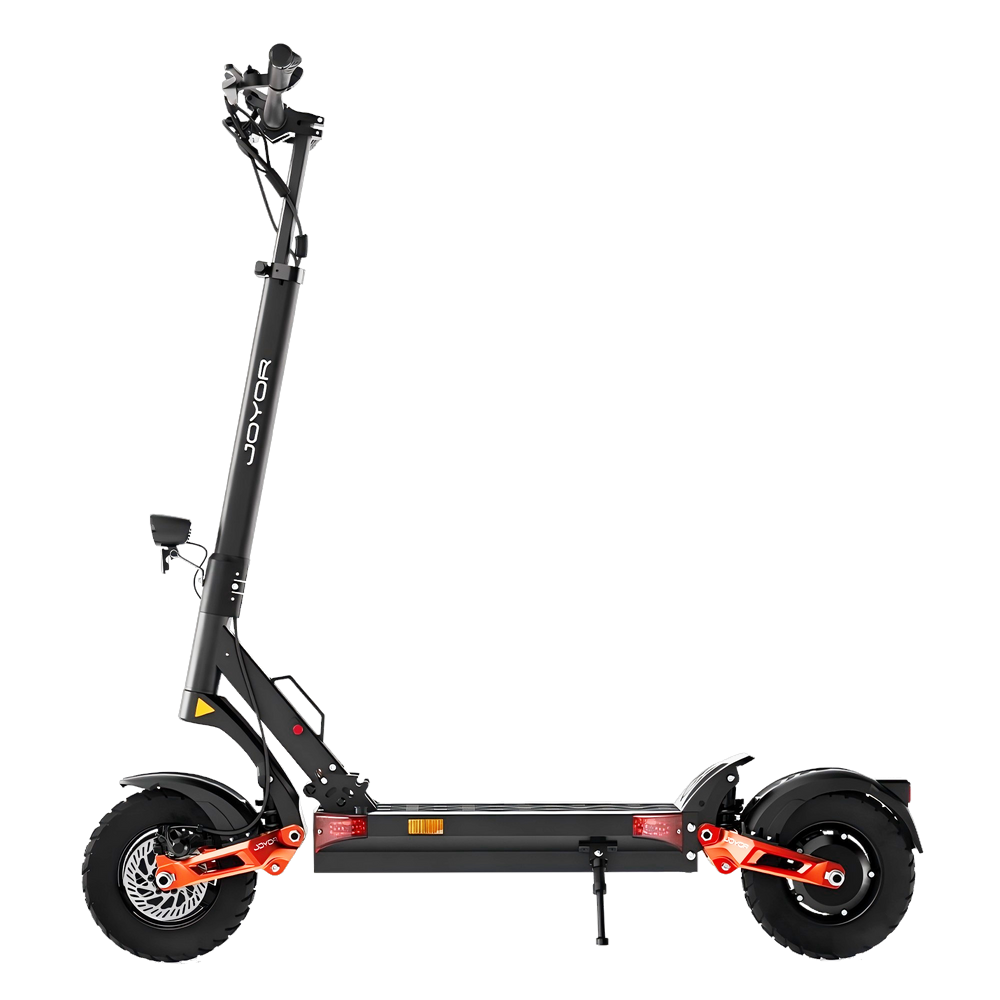
JOYOR T10 Dual-motor Electric Scooter
A nominal 10-inch pneumatic-tire example. Compare its complete dimensions, weight and features with your daily routine.
Explore T10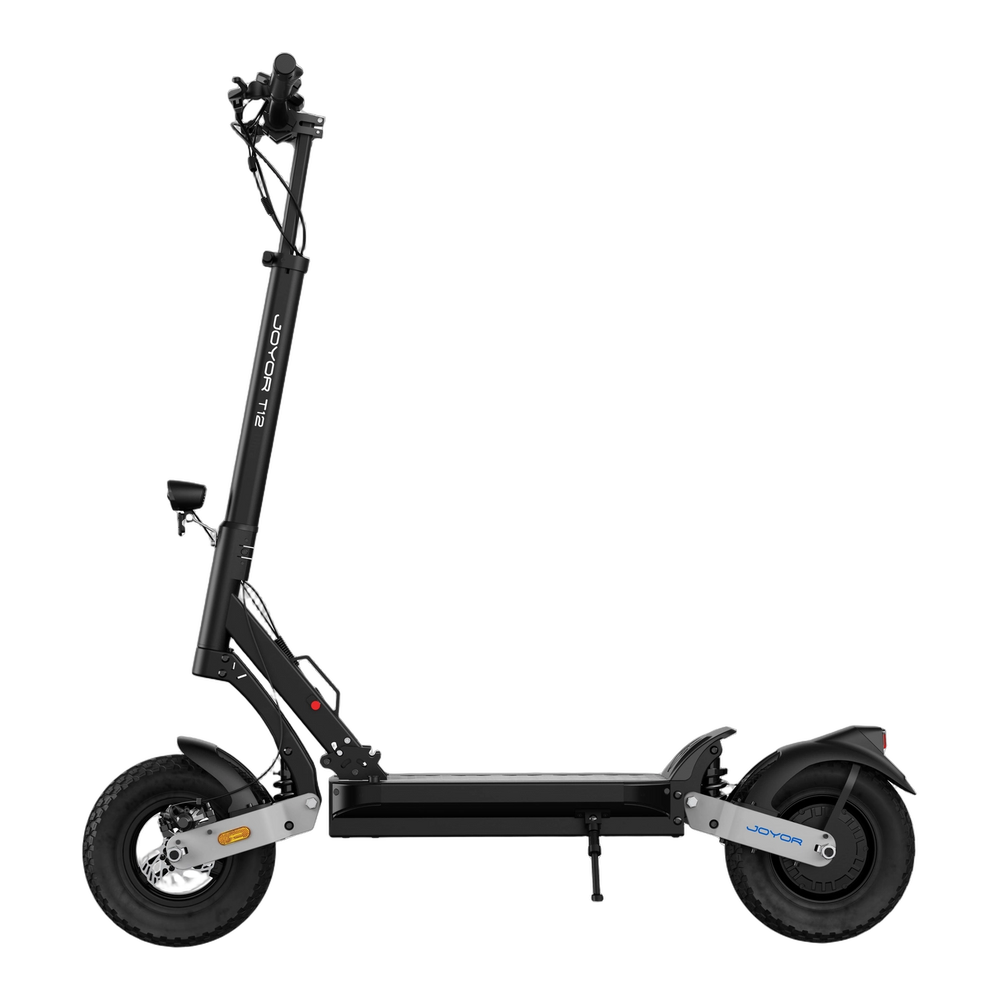
JOYOR T12 All-Terrain Electric Scooter
A nominal 12-inch tubeless off-road tire example. Check the full scooter specifications alongside the larger tire format.
Explore T12Wheel-size questions
Are 12-inch wheels always more comfortable?
Diameter can influence the response to small surface changes, but tires, pressure, suspension, speed and rider conditions all affect the complete ride.
Are 10-inch wheels always easier to carry?
No. Compare the actual weight and folded dimensions of the complete scooter. Battery, motors and frame design also affect portability.
Does tubeless mean puncture-proof?
No. Tubeless describes a tire construction without a separate inner tube. The tire still needs inspection, correct pressure and suitable maintenance.
Can I put 12-inch wheels on my current 10-inch scooter?
Do not assume compatibility. Use the approved wheel and tire specifications for your exact model, and ask support before considering any change.