JOYOR Buying Guide
Brakes deserve a place on your shortlist alongside range, power and weight. Mechanical and hydraulic disc brakes both use pads gripping a metal disc to slow the wheel. The difference is how your hand delivers force to those pads—and what that means for everyday control and care.
The Short Answer
Mechanical Disc Brakes
A practical choice for routine riding when you value cable-based adjustment and are prepared to keep the system correctly maintained.
Hydraulic Disc Brakes
Worth considering when lighter lever effort and fine control matter to you, with specialist servicing available when the hydraulic system needs attention.
Choose around your route, budget and the complete scooter. Neither label alone tells you how quickly you will stop.
What Actually Changes Between the Two?
The photographs below show bicycle brake systems to make the components easier to identify; they are not photographs of JOYOR original equipment.

Mechanical: Force Travels Through a Cable
Lever → Cable → Caliper → Disc
Squeezing the lever pulls a cable, which operates the caliper and presses the pads against the disc. Cable condition, routing and adjustment influence the feel. As parts wear, cable tension or pad clearance may need attention. This gives owners a visible adjustment system, but it still requires the correct procedure for the fitted brake.

Hydraulic: Force Travels Through Fluid
Lever → Fluid Pressure → Caliper → Disc
Squeezing the lever pressurises fluid in a sealed hose, moving the caliper pistons and pads. Hydraulic systems often need less hand effort and make braking force easier to vary smoothly. They still have wear parts, and hose damage, leaks or air in the system require appropriate inspection and service.
See Hydraulic Pressure in Motion
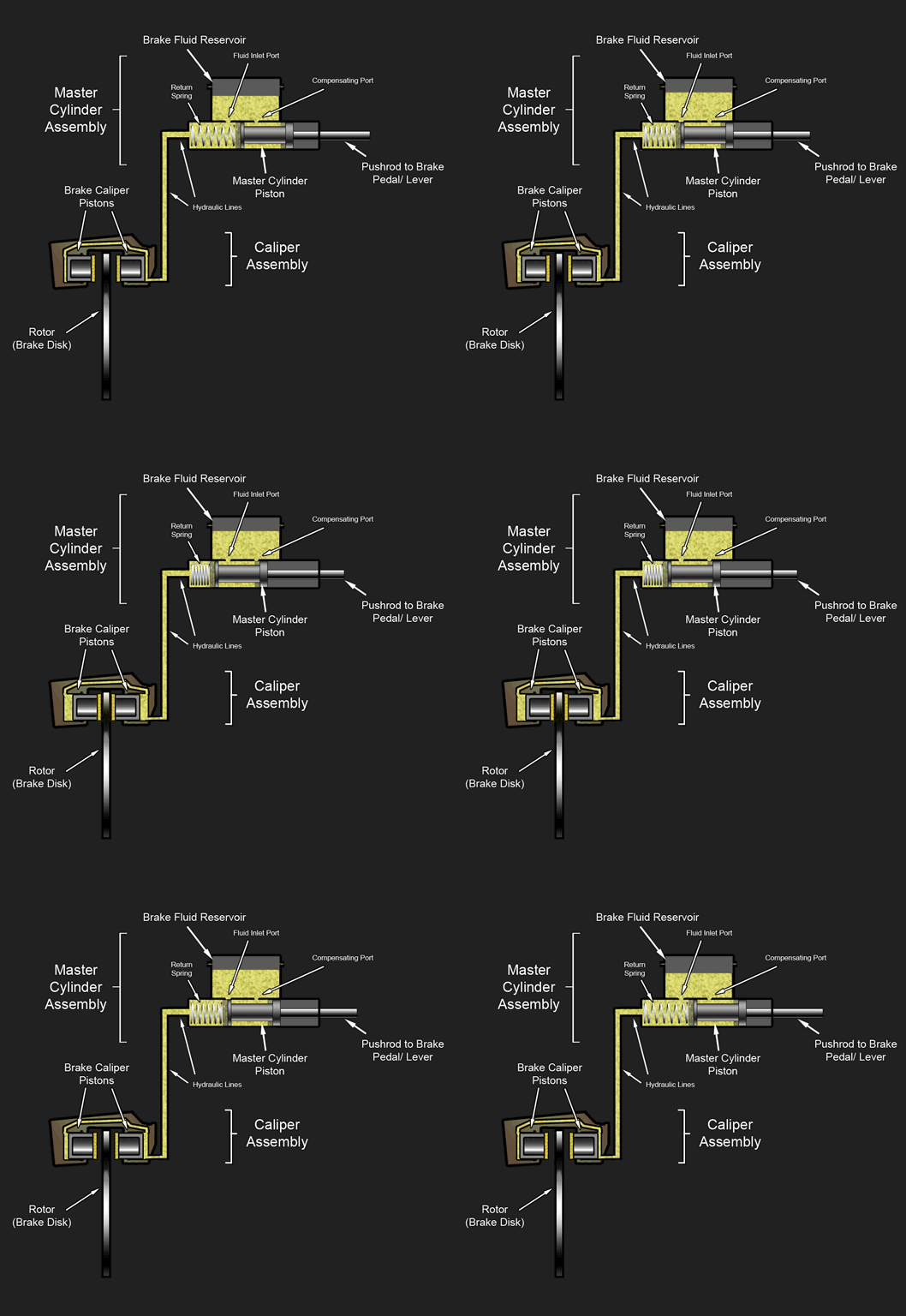
One Input, Pressure Through the Line
This simplified animation shows the principle behind hydraulic disc braking. The master cylinder creates pressure in the fluid, which moves the caliper pistons. The layout is generic; the actual parts and service procedures vary by brake system.
- The lever input moves a piston in the master cylinder.
- Fluid pressure travels through the sealed hydraulic line.
- Caliper pistons move the pads against the disc.
Mechanical vs Hydraulic Disc Brakes at a Glance
Swipe the table to compare
| What to Compare | Mechanical Disc Brakes | Hydraulic Disc Brakes |
|---|---|---|
| Force transmission | Cable pulls the caliper mechanism | Fluid pressure moves the pistons |
| Lever feel | Influenced by cable friction and adjustment | Often lighter, with smooth force control |
| Routine attention | Pads, discs, cables and adjustment | Pads, discs, hoses and leaks |
| System servicing | Cable and pad adjustment; worn-part replacement | Hydraulic inspection and bleeding when required |
| Buying priority | Cable-based simplicity and overall value | Lever comfort and fine control |
These are general differences, not stopping-distance test results for individual scooters.
Match the Brake Setup to Your Riding
For Regular, Familiar Routes
On a predictable route with moderate riding demands, correctly maintained mechanical disc brakes can be a sensible choice. Compare the whole scooter before paying for an upgrade: battery capacity, tires, weight and storage needs may have a greater effect on your routine.
For Frequent Slowing and Stopping
If your journey involves repeated controlled stops, hydraulic lever feel may be a useful comfort advantage. Consider how easily you can reach and operate the levers. A test ride, where available, tells you more about your own hand comfort than a specification label.
For Routes with Descents
Look beyond motor power and consider the complete braking system, tire grip and your ability to manage speed. Hydraulic control may appeal, but neither brake type removes the need to slow early. Long or steep descents demand extra care because repeated braking generates heat.
Find Your JOYOR Brake Setup
Use the brake differences to shortlist these JOYOR models: T6 has mechanical disc brakes, while T10 and T12 Ultra list hydraulic brakes. Compare each scooter’s complete equipment and choose the setup that suits your route.

Mechanical Disc Brakes
JOYOR T6
Front and rear mechanical disc brakes accompany a single-motor setup. Consider T6 if you prefer cable-operated braking and its overall equipment suits your route.
View JOYOR T6 →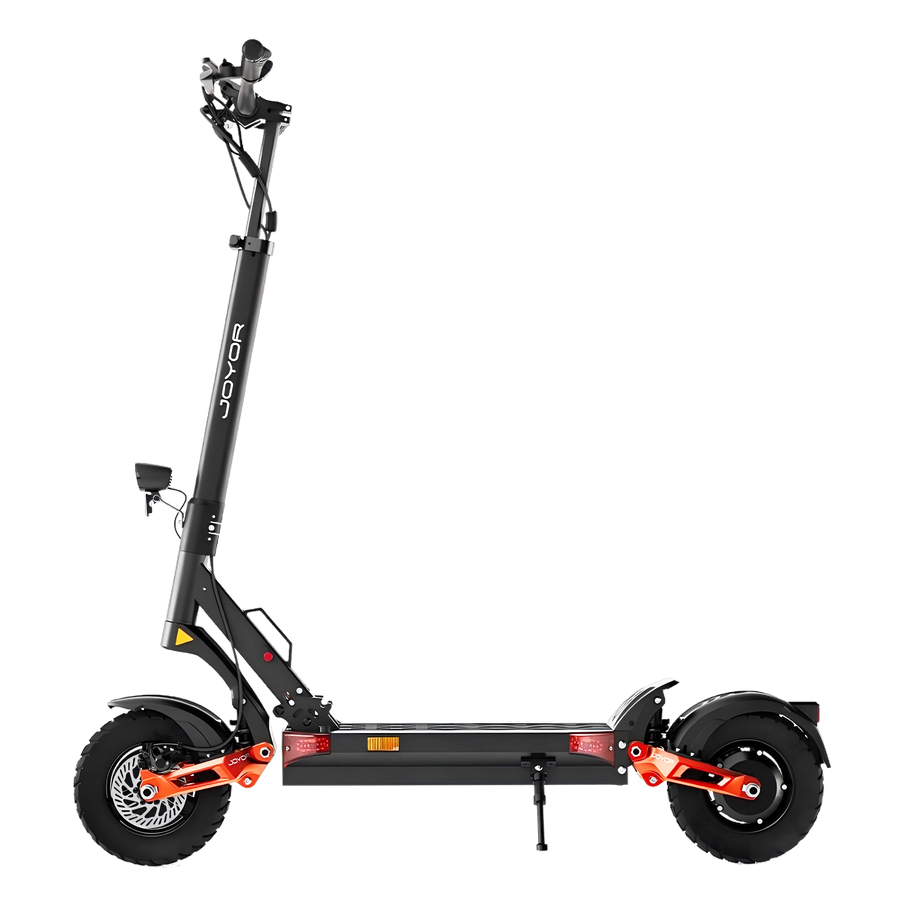
Hydraulic Disc Brakes
JOYOR T10
Front and rear hydraulic brakes accompany dual motors. Consider T10 when hydraulic braking is a priority within a dual-motor scooter shortlist.
View JOYOR T10 →
Hydraulic Disc Brakes
JOYOR T12 Ultra
Front and rear hydraulic brakes combine with dual motors and 12-inch tubeless tires. Consider Ultra if that wider equipment package matches your priorities.
View JOYOR T12 Ultra →For the broader differences in battery, tires, weight and storage, read our T12, T12 Ultra, T10 and T6 buying guide.
Why Brake Type Does Not Tell the Whole Story
Actual stopping depends on speed, rider and scooter weight, tire grip, surface conditions, brake condition and technique. Wet or loose ground can reduce traction even when the brakes work correctly. Choose a manageable speed, leave space and apply the brakes progressively. A hydraulic label is not a promise of a specific stopping distance or protection against skidding.
Plan for Care Before You Buy

Both systems need clean discs, usable pads and regular checks. Mechanical brakes also need sound cables and correct adjustment; hydraulic brakes need intact hoses and a sealed system. Hydraulic servicing may involve bleeding with the specified fluid and tools. Ask a qualified technician when needed, and follow the instructions for your actual brake system.
Inspect the whole path: the friction surfaces, the pad condition and the cable or hose that connects the lever to the brake. Use the instructions for the fitted system when judging wear or arranging service.
Questions Before You Choose
Are hydraulic disc brakes maintenance-free?
No. Pads and discs still wear, and hoses and seals still need checking. Bleeding and other hydraulic work should follow the requirements of the fitted brake system rather than a universal service interval.
Can mechanical disc brakes suit everyday riding?
Yes, when the scooter fits your route and load requirements, the brakes are correctly maintained and you ride within their capabilities. Mechanical does not automatically mean inadequate, just as hydraulic does not automatically mean a shorter stop in every situation.
Does a hydraulic suspension mean hydraulic brakes?
No. Suspension manages bumps; brakes slow the wheels. They are separate systems. The T6, for example, lists hydraulic spring suspension alongside mechanical disc brakes. Check the brake specification itself.
How do I choose replacement brake parts?
Confirm the exact model, version and fitted brake assembly. Similar-looking pads or calipers are not necessarily interchangeable. Send clear photos to JOYOR support if unsure before choosing from the brake parts collection.
Choose the Setup You Will Value on Every Ride
Start with lever comfort, your usual route and access to servicing, then compare the scooter as a whole. Mechanical disc brakes offer a cable-operated option; hydraulic brakes offer a different feel and maintenance approach. Use those differences to build a shortlist that fits your riding, budget and ownership plans.
Compare JOYOR T-Series Scooters →Image Credits
Mechanical brake photo: Shih-Han Lin · CC BY 2.0 · Original photo displayed without pixel edits
Hydraulic brake set photo: Rado bladteth Rzeznicki · Public domain
Hydraulic animation: KDS444 · CC BY-SA 3.0 · Original animation, unmodified
Rotor and caliper photo: Alextredz / Tredz · Wikimedia Commons · CC BY-SA 4.0 · Original photo displayed without pixel edits
Article cover: AI-assisted composition adapted from the Shih-Han Lin and Alextredz / Tredz photographs credited above; layout, crop and colour adapted. Cover composition released under CC BY-SA 4.0. Third-party brake examples do not imply JOYOR fitment or endorsement.