Start with six questions. End with one scooter that makes sense.
The best electric scooter is not automatically the fastest, the longest-range or the least expensive. It is the model that fits your local rules, real route, storage routine and expectations after the first month of ownership.
Country, city and road type determine which scooters should remain on your shortlist.
Plan for both directions, normal detours and a reserve for conditions that reduce range.
Stairs, trains, office storage and car boots can make weight as important as power.
Compare specifications only after you have defined the job. A scooter should be selected for the journey you repeat, not the exceptional ride you imagine once a year.
Move through the decision in the right order.
Each stop answers a different ownership question. If a model fails an earlier stop, a bigger number later on does not make it a better choice.
01. Confirm road legality first
Electric scooter rules vary by country and can also differ locally. Public-road use may depend on approval, speed, lights, brakes, insurance, rider age and where the scooter is permitted. Germany commonly requires ABE approval; Spain uses its DGT certification framework. Always check current official guidance for the exact place and product configuration.
An EU sales listing does not automatically mean public-road approval everywhere in Europe.
02. Calculate usable range
Advertised range is useful for comparison, but it is not the distance every rider will achieve on every day. Rider weight, hills, speed, temperature, wind, stop-start traffic, tire pressure and riding style all change energy use.
round trip
detours
reserve
Would this journey still work on a cold day, with hills and no charging at the destination?
03. Buy enough motor, not just more motor
Motor output is most noticeable in acceleration, climbing and the ability to carry load. Flat urban journeys can need less power than steep routes or demanding terrain. A dual-motor setup may make sense for harder use, but power does not override the legal speed limit where you ride.
Consider gradient, rider weight and cargo before choosing a power class.
04. Match the scooter to your day
Folding is not the same as portability. A large battery and heavy-duty frame add capability, but they also add weight. Check the scooter's total mass, folded dimensions and lifting points if you use stairs, public transport, shared storage or a car boot.
If you cannot comfortably lift it when folded, it is not a portable scooter for your routine.
05. Treat comfort and control as one system
Suspension, pneumatic tires, a stable frame and enough deck space affect every kilometre. Reliable brakes matter just as much. If your route includes paving joints, cobblestones, rough asphalt or longer distances, these features are core requirements rather than optional extras.
Choose for the worst surface you encounter regularly, not the smoothest part of the trip.
06. Check support before you need it
Tires, tubes, brake pads and other wear items eventually need replacement. Before ordering, confirm that compatible parts, repair information, clear warranty terms and responsive technical support are available for the exact model.
Support and parts availability can matter more than a small difference in purchase price.
Shortlist by job, not by model name.
Use the profile closest to your normal week. Then compare current specifications, approval status, weight and availability for your market.
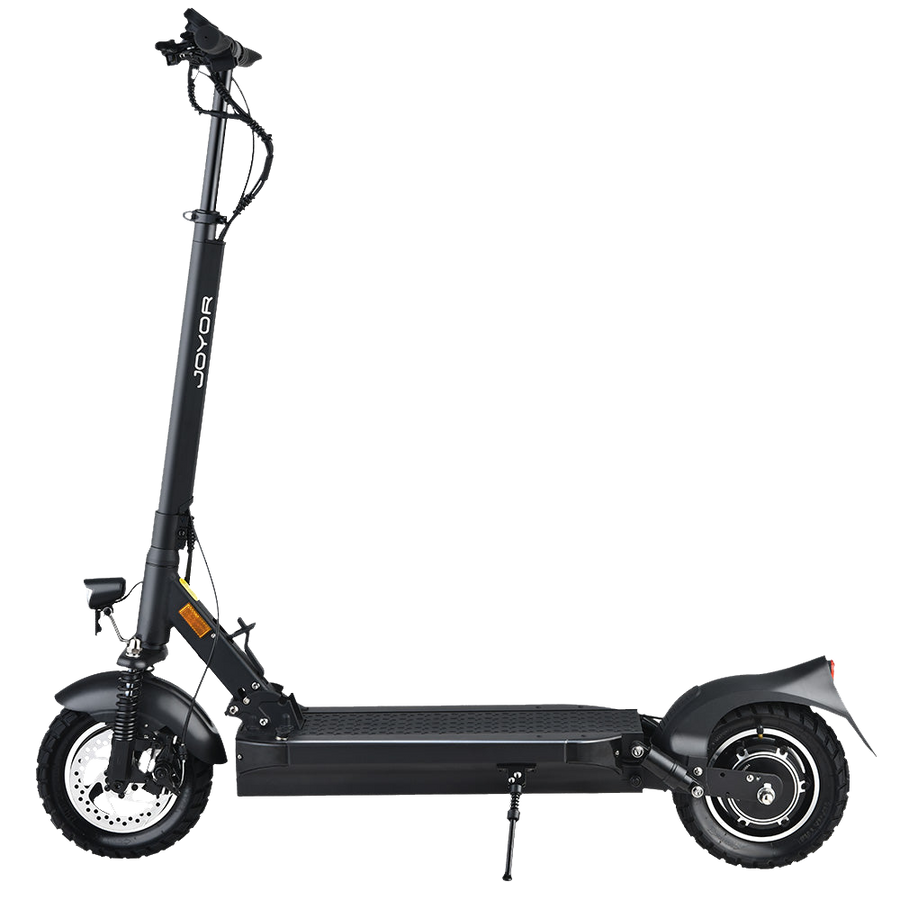
The daily commuter
For regular city journeys where the scooter must fit around work, storage and traffic.
- Road-legal configuration
- Predictable braking
- Practical folded size
- Round-trip range with reserve
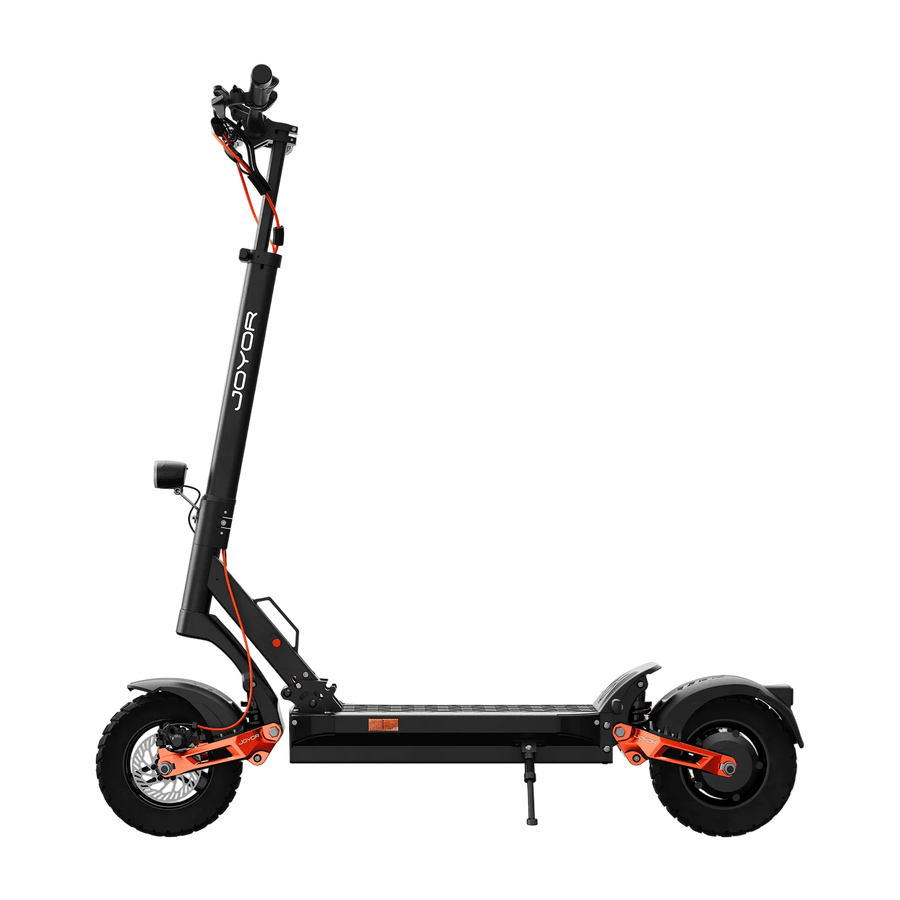
The distance rider
For longer journeys where battery capacity and repeated comfort take priority.
- Usable range, not headline range
- Suspension and pneumatic tires
- Comfortable deck and controls
- A realistic charging plan
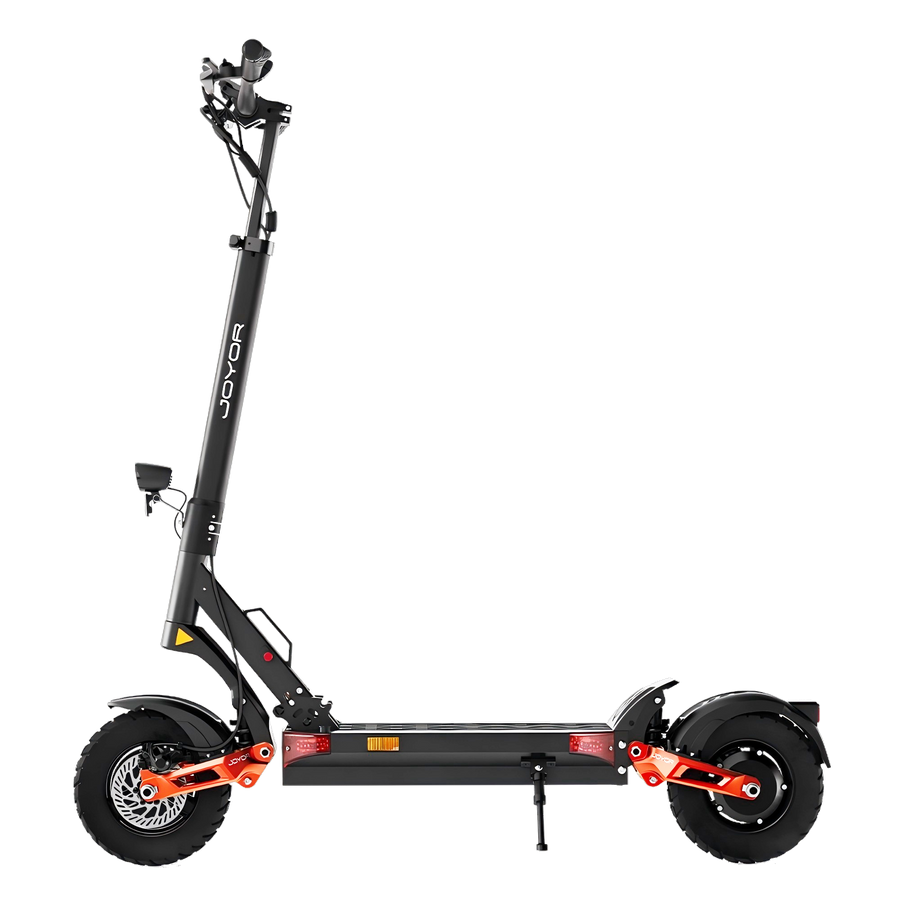
The mixed-terrain rider
For routes that regularly move beyond smooth pavement and ask more from the chassis.
- Terrain-appropriate tires
- Suspension and ground clearance
- Strong, controlled braking
- Power suited to load and gradient
Ready to shortlist?
If one line is still uncertain, pause and verify it before ordering.
Turn the buyer file into a shortlist.
Product specifications, approvals and availability can change by model and market. Review the current product page and policies before making a final decision.
Quick answers before you choose.
What should I check first when buying an electric scooter?
Begin with the rules that apply where you will ride. Confirm approval or certification, permitted speed, required equipment, insurance and riding areas before comparing performance.
Why can real range be lower than the advertised range?
Rider weight, hills, temperature, wind, speed, acceleration, road surface and tire pressure all affect energy use. Treat the published figure as a comparison point and plan a practical reserve.
How much motor power do I need?
It depends mainly on gradient, rider and cargo load, and terrain. Flat city routes generally demand less than steep or rough routes. More motor power does not remove local legal speed limits.
Is a heavier electric scooter better?
Not automatically. Extra weight may come with a larger battery, stronger frame or more suspension, but it also makes stairs and public transport harder. Match the weight to your routine.
Which features matter most for comfort?
Suspension, pneumatic tires, stable frame geometry, deck space and suitable handlebar height all affect the ride. Dependable brakes are essential for control.
Why should spare parts and warranty affect the decision?
Tires, tubes and brake parts wear over time. Available parts, clear repair information and responsive warranty support reduce downtime and improve long-term ownership.
Start with legality. Plan real range. Match the hills, surfaces and storage routine. Then choose the model you can support for the long term.